
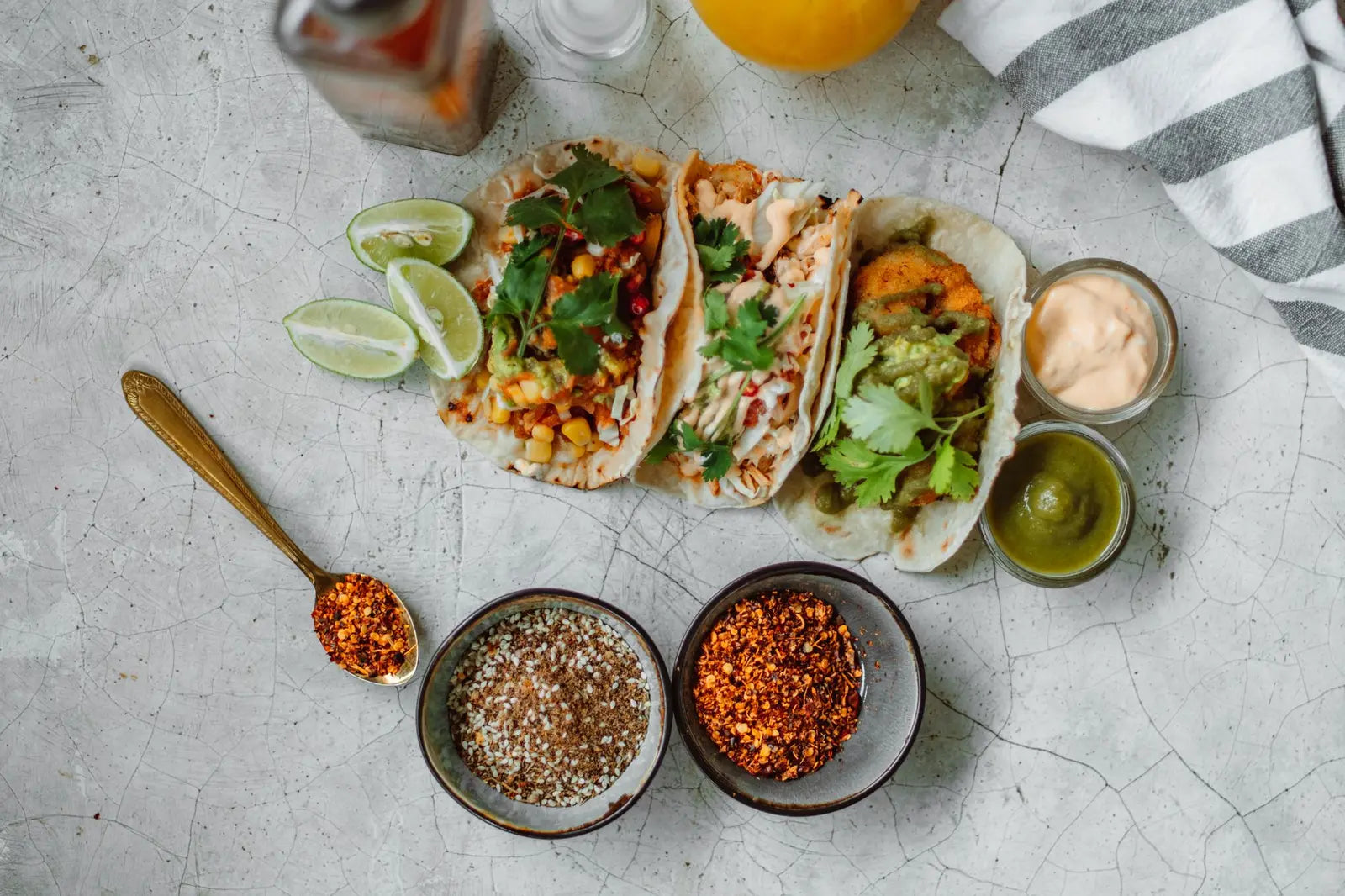

Best Taco Seasoning for AIP and Nightshade-Free Cooking
There is no single best taco seasoning — the right one depends on what your kitchen needs to avoid. Judge any option, homemade or store-bought, against four criteria: ingredient transparency, nightshade-free and seed-spice-free status, gluten-free status, and whether the flavor structure still holds up once the peppers are gone. A homemade AIP-compliant blend is already the right answer for a cook who keeps the right spices stocked and doesn't mind measuring; a verified-label option like Fiesta Fusion or the AIP Flavor Trio is the better fit for a cook who wants that decision made once.
There is no single best taco seasoning. The right one depends on what your kitchen needs to avoid — nightshades, gluten, seed spices, or just a label full of mystery ingredients — and whether the flavor still holds together once those things are gone.
This guide skips the taste-test scoreboard and gives you the criteria to judge any taco seasoning against, homemade included, the same way this gluten-free taco seasoning guide approaches gluten specifically. It also gives an honest answer to a question most buying guides skip: whether you need to buy anything at all, or whether what's already in your pantry already solves the problem.

What's Typically in a Store-Bought Taco Seasoning Packet
A conventional grocery-store packet — the kind sold under names like McCormick, Old El Paso, Siete, Trader Joe's, Great Value, or Ortega — is built around the same core: chili powder, paprika, cumin, garlic powder, onion powder, and a filler like cornstarch or dextrose to bulk out the packet and help it thicken into a sauce once water is added. Some list "spices" as a single catch-all ingredient rather than naming each one, which is convenient for the manufacturer and unhelpful for anyone trying to read a label carefully.
None of that makes a packet bad. It makes it a conventional blend, built for a kitchen with no restrictions, where chili powder's heat and paprika's color are the whole point. Chili powder and paprika are nightshades, and cumin is a seed spice — both commonly avoided during AIP elimination — so a typical packet is the baseline this guide compares every other option against, not a product to rank or grade.
Gluten-free and AIP-compliant are related but separate questions, and it helps to keep them that way. A seasoning can be certified gluten-free and still contain paprika, chili powder, or cumin, which keeps it off an AIP or nightshade-free kitchen's list even though it clears the gluten bar cleanly. Checking one box doesn't mean the other is automatically checked too.

The Decision Criteria That Separate a Good Fit From a Bad One
Once "best" stops meaning "tastes good to a stranger in a taste test," four criteria decide whether a taco seasoning fits your kitchen:
- Ingredient transparency — every ingredient named on the label, not folded into a vague "spices" line that could hide almost anything.
- Nightshade-free and seed-spice-free status — no chili powder, paprika, cayenne, or red pepper flakes; no cumin, coriander seed, fennel seed, or mustard seed.
- Gluten-free status — checked separately from AIP status, since the two don't automatically overlap, even in blends that look similar on the shelf.
- Flavor structure — whether the blend rebuilds warmth, smokiness, and brightness, or just leaves a gap where the peppers used to be.
Label reading matters more than most packets make it feel. The FDA recognizes nine major food allergens, and more than 160 foods have been identified as causing food allergies in sensitive people — reason enough that a vague ingredient line isn't a small thing for a cautious cook to wave off. The same caution applies to nightshade and seed-spice exclusions, which aren't regulated allergen categories but matter just as much to a reader managing them. Spices that are commonly avoided during the AIP elimination phase don't always announce themselves clearly on a packet front, which is exactly why the ingredient panel, not the marketing copy, is where this decision gets made.

Flavor Structure: Why Nightshade-Free Doesn't Have to Mean Bland
Warmth is bigger than peppers. That's the piece most nightshade-free seasoning gets wrong — it removes chili powder and paprika and stops there, leaving a blend that reads compliant on the label and tastes thin on the plate once it hits a hot pan.
A seasoning built with real flavor structure rebuilds what those spices were doing instead of just cutting them and calling it done. Turmeric and smoked salt carry color and depth, ginger and cinnamon carry warmth, and garlic and onion carry the savory foundation underneath all of it — foundation, lift, and finish, working the same jobs chili powder and cumin used to cover, just from a different direction. That structure, not the absence of any one ingredient, is what determines whether a nightshade-free taco seasoning tastes complete or just tastes like something is missing.

When Homemade Taco Seasoning Is Enough
Here's the honest answer most buying guides skip: if your pantry already has AIP-compliant spices in it and you don't mind measuring six ingredients into a bowl, a homemade blend is already the right call, and nothing below this section is required reading. The AIP taco seasoning recipe covers the full measured version, and the chili powder substitute guide breaks down that particular swap in more depth if you're building a blend from scratch rather than following a set ratio. For a fuller look at when either route makes more sense for your kitchen, AIP spice blends vs homemade seasoning weighs the two side by side.
Homemade wins on cost and control — no packaging markup, and every gram accounted for, right down to how much smoked salt goes in. It asks more of you upfront: a stocked pantry and a few minutes with measuring spoons each time the jar runs low. Neither of those is a dealbreaker for a cook who already has the AIP staples on hand and doesn't mind the five extra minutes it takes to mix a batch before dinner.
When a Ready-Made, Verified-Label Option Is Worth It
A ready-made option earns its place once measuring six spices every few weeks stops fitting the week, or the pantry isn't stocked with the right staples yet. For that reader, the AIP Flavor Trio covers the seasoning cabinet in one order, or a single jar of Fiesta Fusion AIP taco seasoning covers taco night on its own without touching the rest of the spice rack. The single jar runs $12.99, and the Trio runs $36.00 — a verified, checkable price either way, not a "starting at" figure that hides the real total.
Buying doesn't mean giving up the criteria above, and it shouldn't. A ready-made blend still has to pass ingredient transparency, nightshade-free and seed-spice-free status, and flavor structure — it isn't exempt just because it comes pre-measured in a labeled jar. It just means someone else already did the measuring, the sourcing, and the label-reading, so the jar in your hand has already cleared the same checklist you'd otherwise be running yourself.
How to Use It Once You've Chosen
Whichever option fits, the ratio stays about the same across homemade and ready-made blends alike: roughly one tablespoon per pound of ground beef or turkey, added toward the end of cooking with a splash of water or broth to help it cling to the meat rather than sitting on top of it. Chicken takes slightly less — closer to a scoop per pound — since it carries less fat to balance a heavier hand with the seasoning.
Store any blend — homemade or jarred — in an airtight container away from heat and light, where it holds its color and aroma for three to four months before it's worth refreshing. A batch mixed too far ahead loses its aroma quietly, so smell it before a big taco night to confirm it still has the depth you're counting on.
"Best taco seasoning" was never really one product. It's a set of criteria — a readable label, no nightshades or seed spices, a gluten-free check where it matters, and a flavor structure that doesn't go flat once the peppers leave. Measure the homemade version if the pantry's already stocked, or reach for a jar that passes the same checklist if it isn't. Either way, taco night doesn't have to be the thing you give up just because a label got more complicated.